
Ciara Varley, Remeredzai Oliver Mushangure, Peter C. McKeown, Charles Spillane.
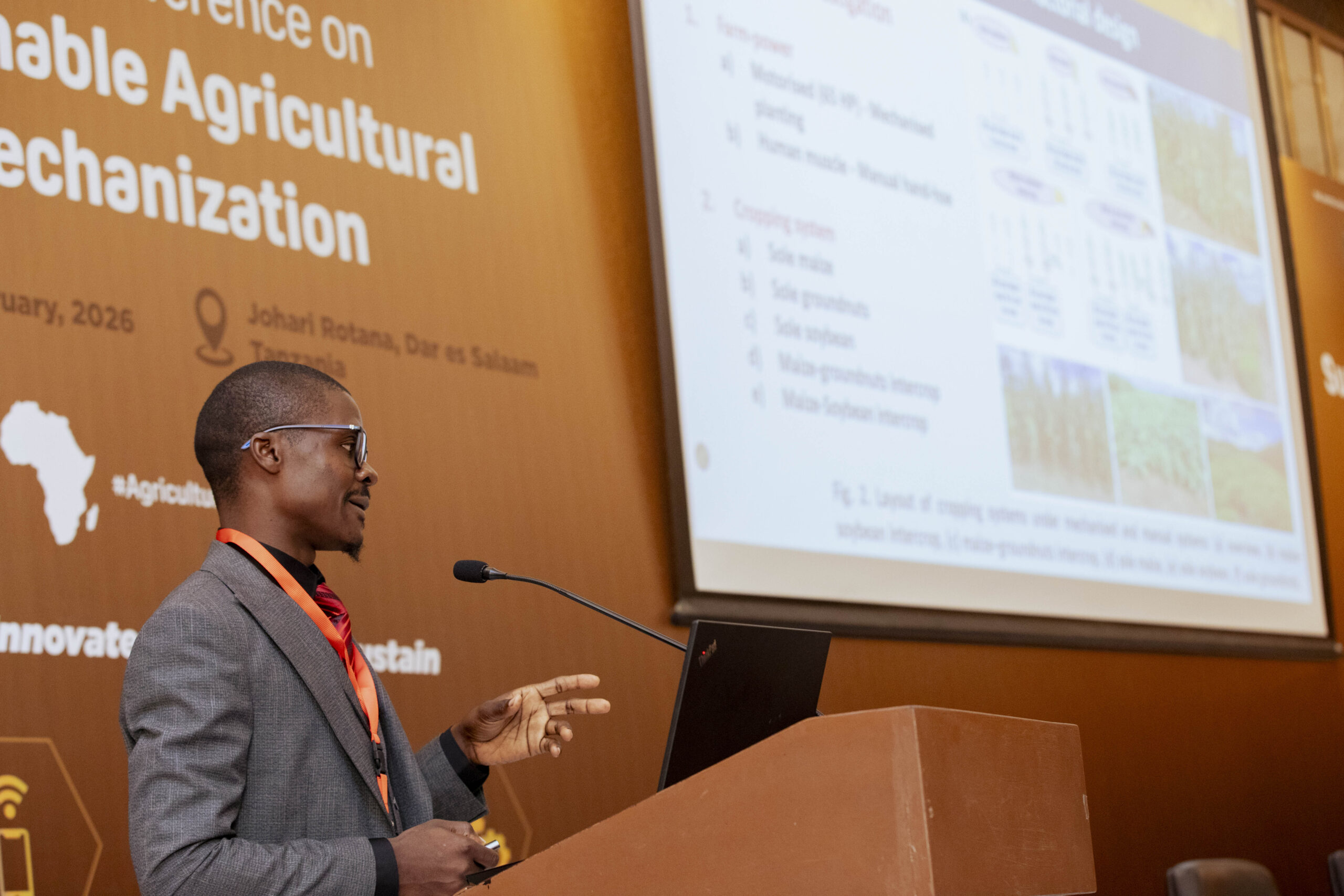
LEG4DEV researcher Remeredzai Oliver Mushangure attended the FAO’s Africa Conference on Sustainable Agricultural Mechanization, sharing insights on the role mechanisation can have in reducing labour burden for smallholder farmers working in Zambia.
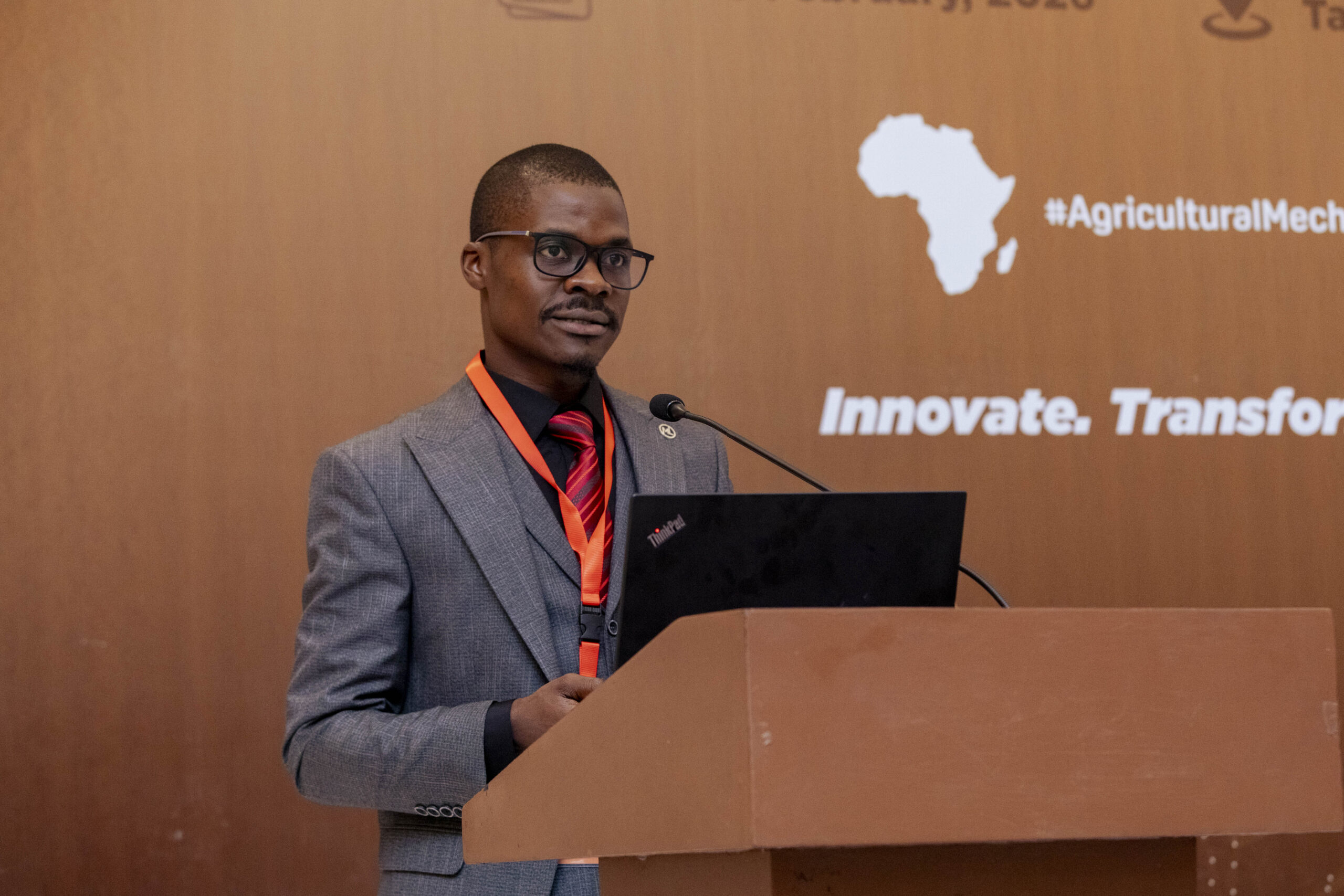
‘Innovate. Transform. Sustain’.
This was the theme of the 2026 Africa Conference on Sustainable Agricultural Mechanization from the FAO. The event, held in Dar Es Salaam, Tanzania, was organised by the Food and Agriculture Organization of the United Nations (FAO) and hosted by the Government of the United Republic of Tanzania.
The conference brought together 500 representatives across the public and private sector, UN agencies, NGOs and governmental organisations, research organisations and universities, youth and farmers. Attendees met together to consider the future direction of mechanisation and other smart farming practices in Africa.
Representing the EU-funded LEG4DEV project was researcher Remeredzai Oliver Mushangure, who shared his latest LEG4DEV research findings in the presentation: ‘Mechanising Diversification: Agronomic, Nutritional, and Labour Productivity of Maize–Legume Intercropping Systems in Zambia’.
LEG4DEV Shares Insights on the Mechanisation in Maize-Legume Intercropping Systems in Zambia
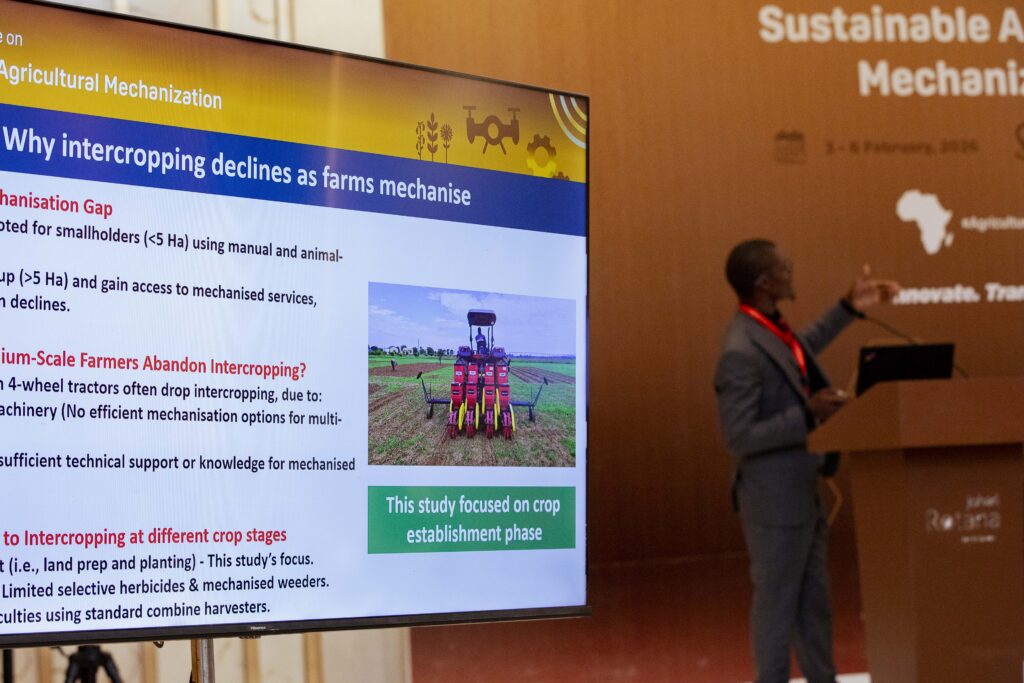
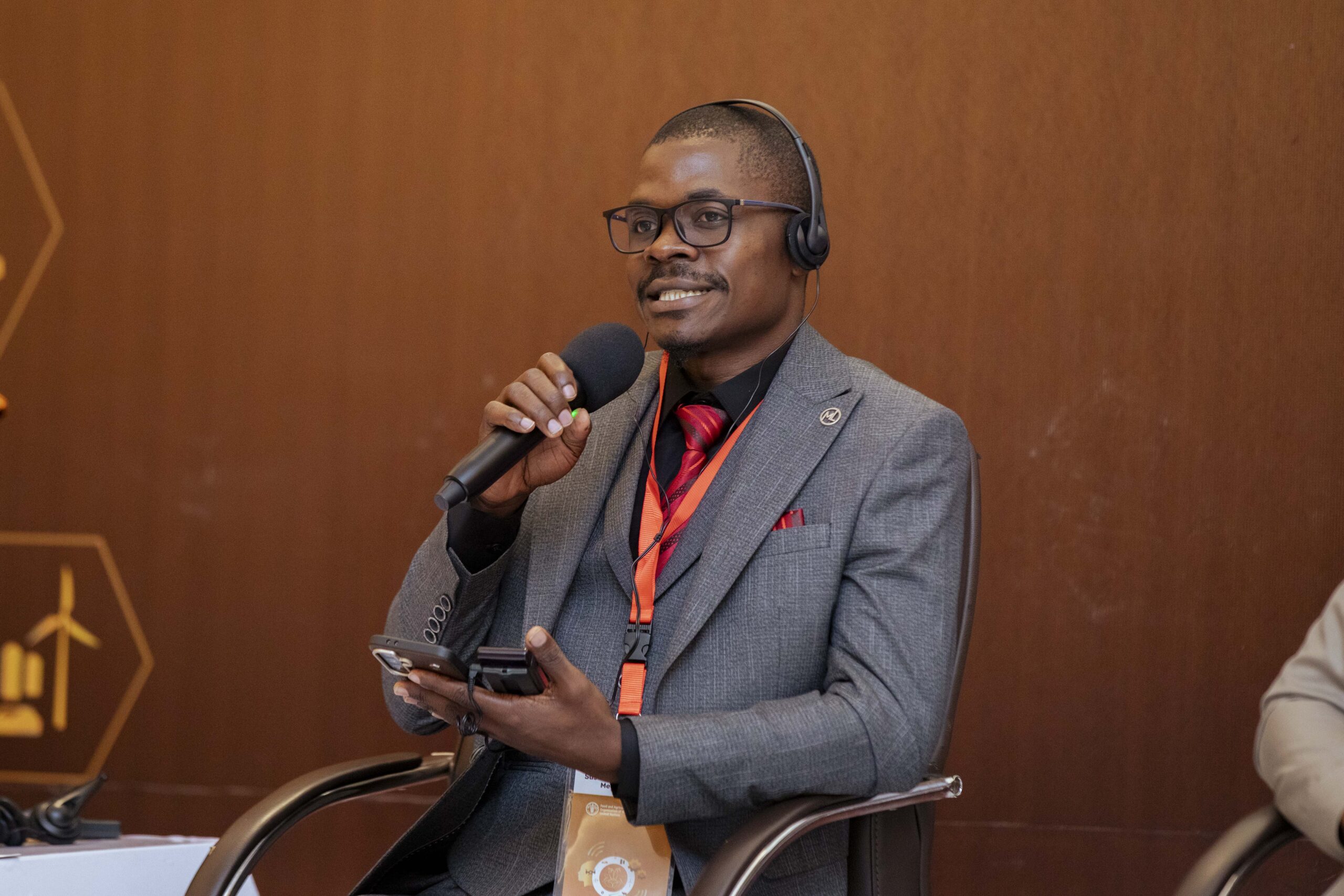
Oliver presented findings from his research investigating the impact of mechanisation on maize-legume intercropping. The research is funded by the EU DeSIRA project and is being completed with international partners including CIRAD/UM6P (Morocco) and IITA (Zambia), with the support of agri-machinery suppliers, farmer groups and extension systems working in Zambia.
Research to date has found that intercropping – the practice of growing multiple crops in the same field – performs better than sole cropping across nutritional output, yield per hectare and system performance. But while intercropping can help farmers win gains across nutrition and yield, the process is more labour intensive than sole cropping. Mechanisation can help solve this problem, allowing farmers to reap the benefits of growing multiple crops without an intensive time investment.
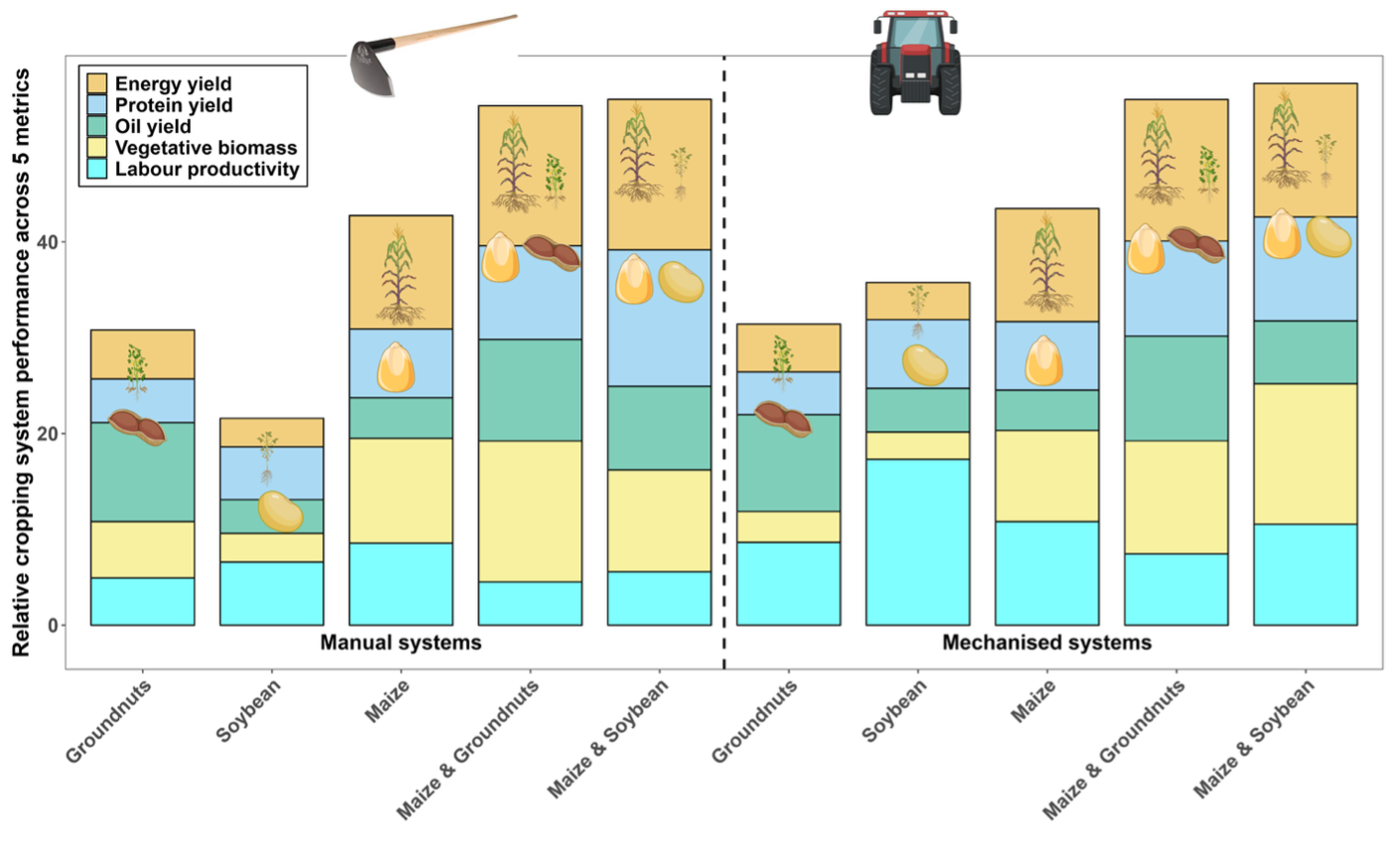
To better understand the impact of mechanisation in practice, Oliver has been carrying out experiments investigating the impact mechanisation has on sole and intercropping farming practices. His results so far demonstrate that mechanisation tools like four-row planters can be effectively adapted for intercropping systems. These planters were used with modified seed metering and spacing configurations, with each unit calibrated for in-row and inter-row spacing for the specific crop to enable effective intercropping. And by supporting more efficient intercropping, these mechanisation tools can help farmers increase their productivity (as indicated by an improved land equivalent ratio) and achieve higher nutritional yields across caloric energy, protein and oil. Mechanisation reduced manual labour time for planting by approximately 70% in intercrop systems compared to manual planting, without compromising yield advantages. The results point to the positive impact mechanisation can have in supporting more farmers to grow multiple crops together.
Despite these benefits, many smallholder farmers do not use mechanised tools. In his presentation, Oliver highlighted how many small-to-medium scale farmers often don’t have access to machinery or may lack the knowledge needed to use them most effectively. To close this gap and support more farmers to carry out mechanised farming practices, Oliver closed his presentation with calls-to-action:
- Adapted Planting Protocols: To support mechanised intercropping, guidelines on planting arrangements for intercrops should be developed for different tools used by farmers, like the four-row planters used by Oliver in his experiments.
- Market Policies: Market incentives to promote diversified, sustainable farming systems should be developed to support more farmers to gain access to mechanisation tools.
- Education and Training: Training for farmers on how to carry out intercropping using mechanised tools can support farmers to grow more efficiently.
- Innovating Machinery and Technical Knowledge: Machinery specifically suited for intercropping systems should be developed to support farmers to more easily carry out intercropping.
Moving towards Mechanisation: Next Steps for Africa
The conference ended with ten agreed action to support smart and inclusive farming across Africa. As highlighted by FAO Assistant Director-General and Regional Representative for Africa, Abebe Haile-Gabriel in his opening remarks:
“Choosing a new direction that embraces mechanization, digitalization, scientific innovation and inclusive policies can fundamentally transform Africa’s agrifood landscape.”
Dr. Abebe Haile-Gabriel, FAO Assistant Director-General and Regional Representative for Africa
Research completed by the LEG4DEV project directly supports this movement toward more mechanised farming practices in Africa. The team looks forward to seeing further outcomes on the topic from Oliver’s research in the coming months.