Ciara Varley, Peter C. McKeown, Charles Spillane
LEG4DEV holds workshop with Addis Ababa stakeholders on research and innovations for climate resilient scaling of legume production and consumption in the region.
We know that legumes can have profoundly positive impacts for food and nutrition security, soil fertility and income generation for smallholder farmers. How do we turn this knowledge into real benefits for smallholder farmers across Eastern and Southern Africa?
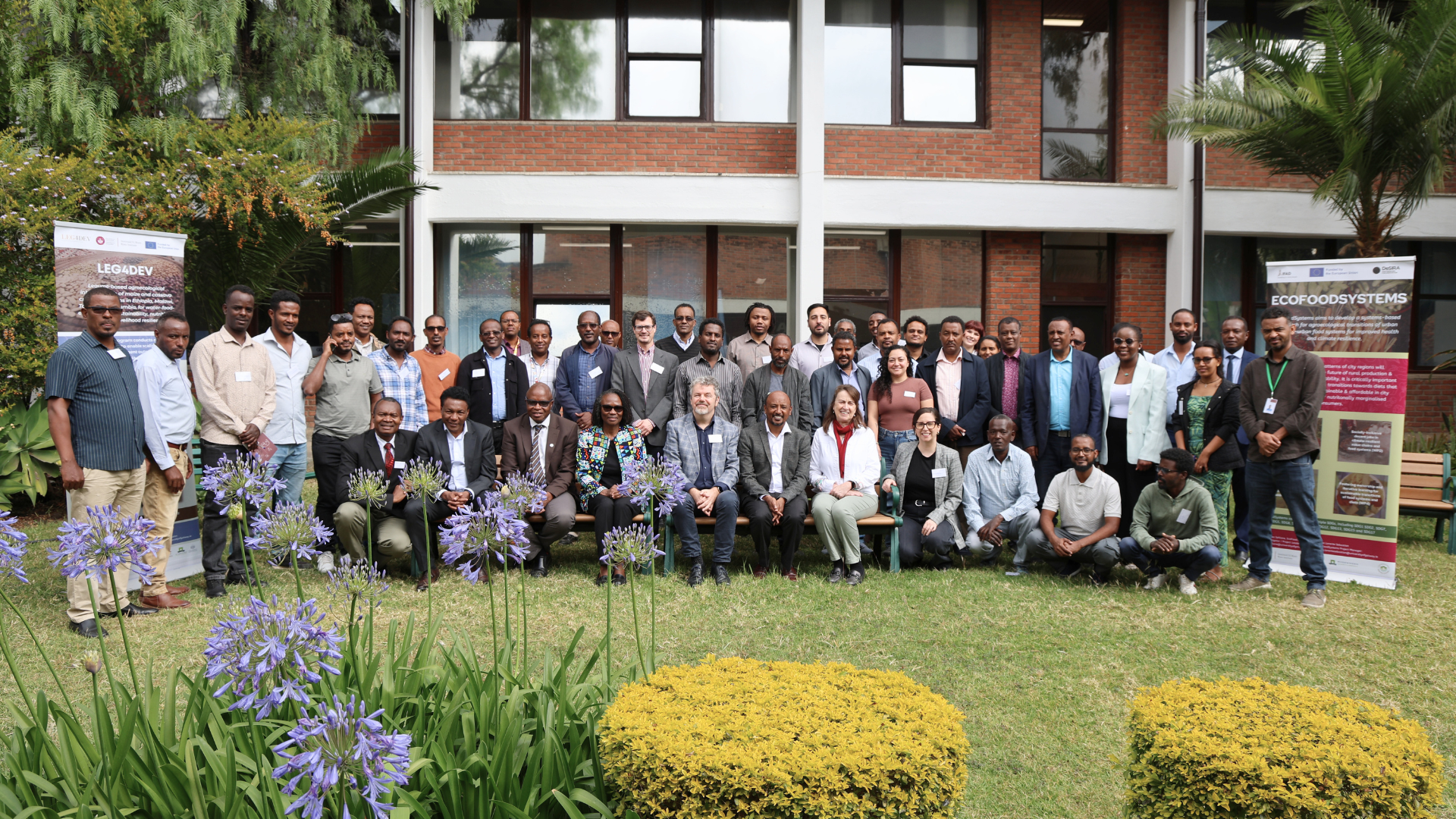
The LEG4DEV project held a joint workshop with the EcoFoodSystems project focused on this question in December 2025. The workshop (jointly organised by the LEG4DEV University of Galway and ILRI teams, with support from the EU-funded EcoFoodSystems Project, World Bank-funded AICCRA program, and CGIAR’s Sustainable Farming Science Programme) brought together 49 participants from across research, policy, development, the private sector, extension system and farmer organisations
The workshop aimed to enhance understanding on climate resilience legume scaling amongst participants, alongside generating actionable strategies to scale climate-resilient legume production and consumption. Participants worked across three sessions to hear latest insights on climate resilient legume scaling and generate recommendations for better scaling of legumes in Ethiopia.
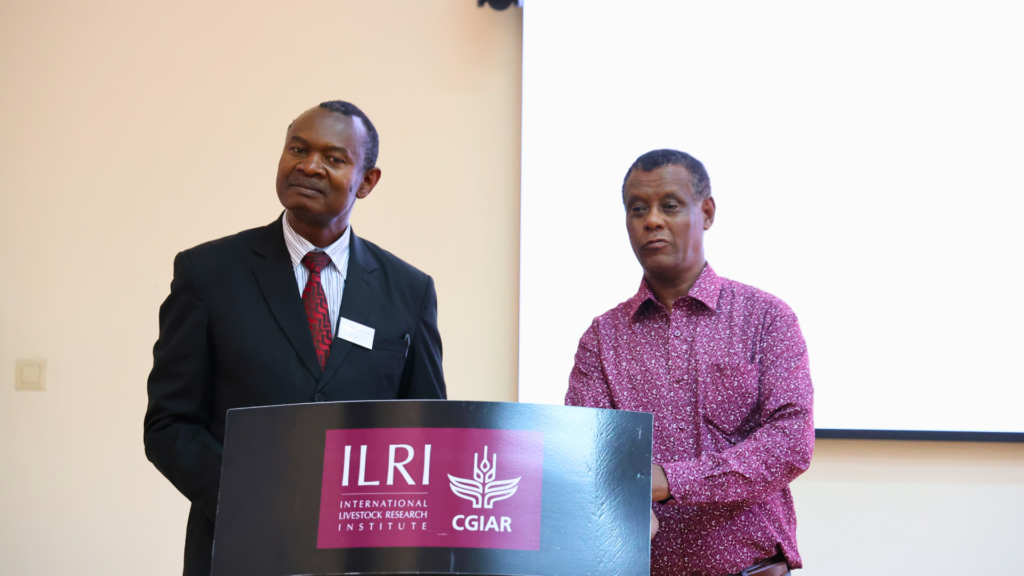
Senior Agrometeorologist-Ethiopian Institute of Agricultural Research (EIAR), speak about the LEG4DEV-supported development of climate-smart legume scaling training manuals for national extension systems.
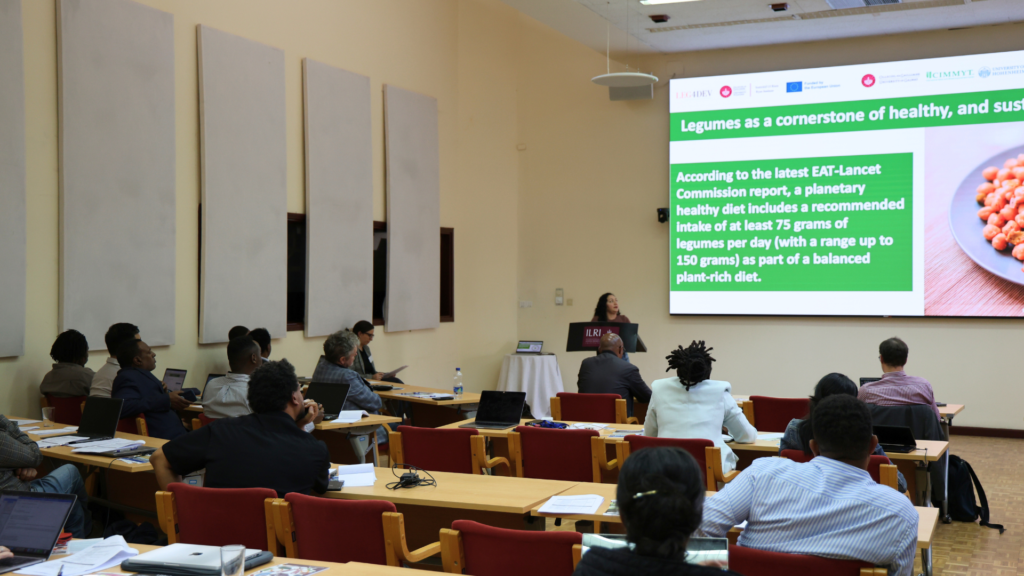
The workshop was opened by Mr. Esayas Lemma of the Ethiopian Ministry of Agriculture. In his opening remarks, Mr. Lemma highlighted the scale of agricultural production in Ethiopia; 3.2 million of Ethiopia’s 24 million hectares of cultivated land are dedicated solely to legumes. Mr. Lemma highlighted that the Ministry of Agriculture has launched a national programme to further promote legume production in Ethiopia, with a particular focus on soybeans, in recognition of the nutritional and economic potential of legumes for Ethiopia.
Mr. Douglas Magundo of the FAO Country Office also spoke at the workshop opening session. He emphasised the need for collaboration to achieve food security. The role of researchers is paramount, he says, as robust evidence and scientific work are fundamental to achieving meaningful and lasting change. Mr. Magundo also pointed to the role of enterprise and the private sector, highlighting commercialisation as a key challenge for legumes.
Dr. Namukolo Covic, ILRI Director General’s Representative to Ethiopia, added to these sentiments, noting the critical importance of nutrition as the lens for food systems transformation. Dr. Covic highlighted the critical importance of the quality and healthiness of people’s diets, highlighting the role of legumes in supporting nutrition and resilience outcomes.
Prof. Charles Spillane, Lead of the LEG4DEV Project, and Dr. Teferi Demissie, Affiliate Investigator on the LEG4DEV project, both spoke on the relevance of LEG4DEV’s work to the barriers and opportunities discussed by the day’s opening speakers. Prof. Spillane and Dr. Demissie related LEG4DEV’s approach to the systems-based perspectives and multistakeholder approaches highlighted by the session’s opening speakers, including the need for generating actionable evidence. The six research focus areas of the LEG4DEV project were described where the multiple roles of legumes were particularly noted, including through improved protein and micronutrient intake. It was noted that strengthening legume production must go hand in hand with demand side interventions on consumption, ensuring that increases in supply translate into meaningful nutritional outcomes.
Following the opening remarks session, participants were given an overview of Climate Modelling, Crop Modelling, and Remote Sensing via Satellite for scaling climate-resilient legume cropping systems by researchers working at the University of Galway, International Livestock Research Institute (ILRI), and Alliance of Bioversity International and CIAT. The need for high-quality datasets emerged as a key focus point, and speakers and participants identified a need to map existing legume programmes to improve coordination and ramp up scaling in Ethiopia.
The second session, Demand-side Legume Consumption for Planet, Health and Livelihoods, focused on contributions LEG4DEV and EcoFoodSystems can make to the Ethiopian Food-Based Dietary Guidelines and other decision-support tools needed in Addis Ababa’s city regional food system.
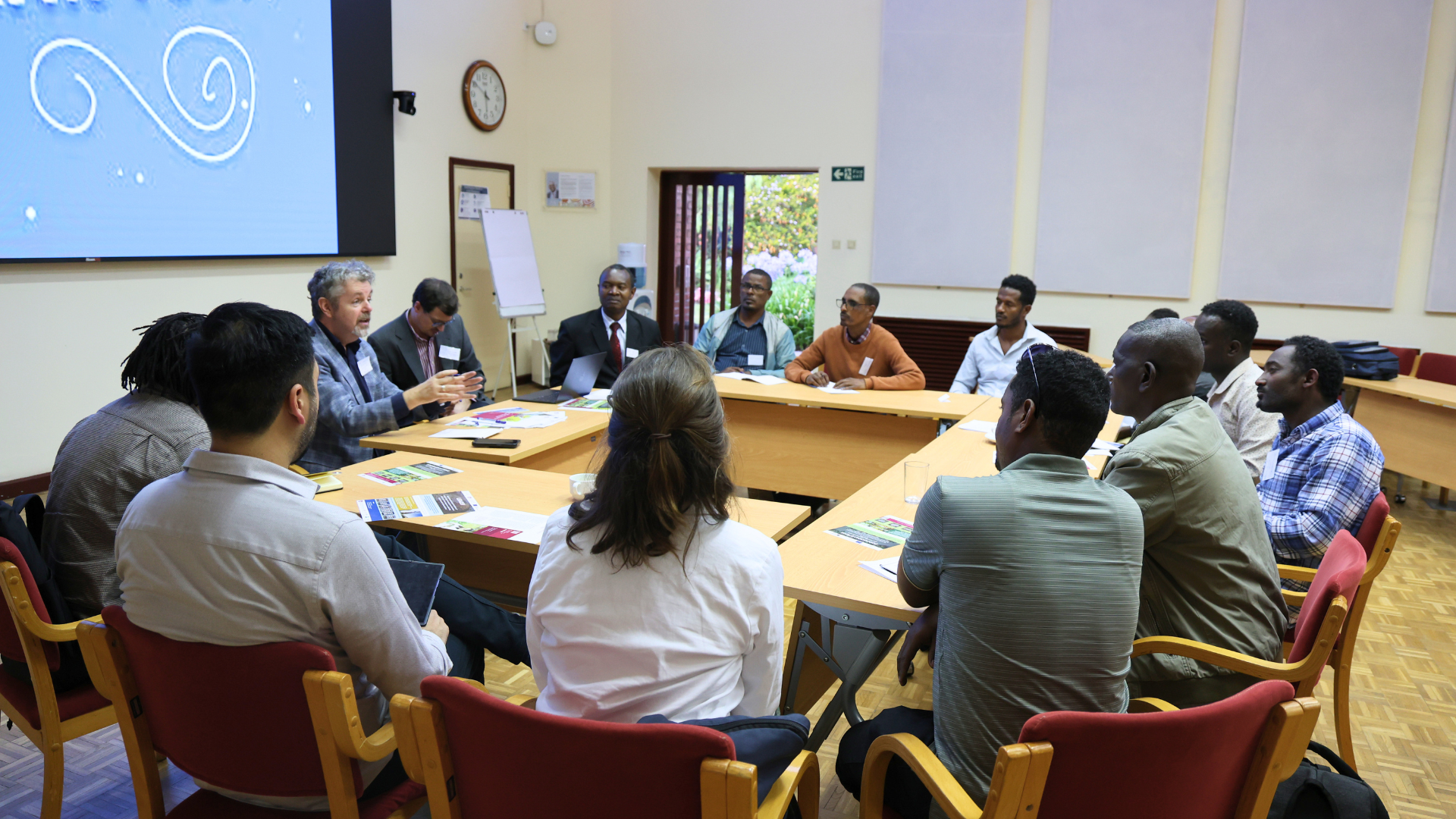
The final session, Capacity Building and Genetic Resources for Scaling Legumes in Ethiopia, had a range of presentations from the LEG4DEV scholarship supported PhD students based in Haramaya University, Jimma University and Addis Ababa University in Ethiopia. The scholarship initiative was launched by the LEG4DEV project in February 2025 to support early career researchers in each LEG4DEV partner country to carry out research and innovation activities related to legume scaling.
Following a final Q&A with stakeholders, Dr. Demissie and Prof. Spillane closed the workshop by thanking the participants, funders and hosts, and noting the key responses to the research presented.
The LEG4DEV project extends thanks to the European Union DeSIRA initiative for funding of the project, and to the collaborators in FAO, ILRI, AICCRA and CGIAR Sustainable Farming Programme who contributed to the development and running of the successful workshop.
An overview of the day’s events and findings are shared in the report, Legumes for Development (LEG4DEV) Ethiopian Workshop Report, available here: https://hdl.handle.net/10568/180297