
Ciara Varley, Fikiri Stiliwati, Paswel Marenya, Charles Spillane, Peter McKeown.
LEG4DEV’s CIMMYT team recently ran a three-day workshop in collaboration with the Tanzanian Agricultural Research Institute (TARI) on ‘Inclusive Business Models for Enterprise Growth and Job Creation’. The workshop is generating ‘A Playbook for Scaling Legume Innovations in Tanzania’.
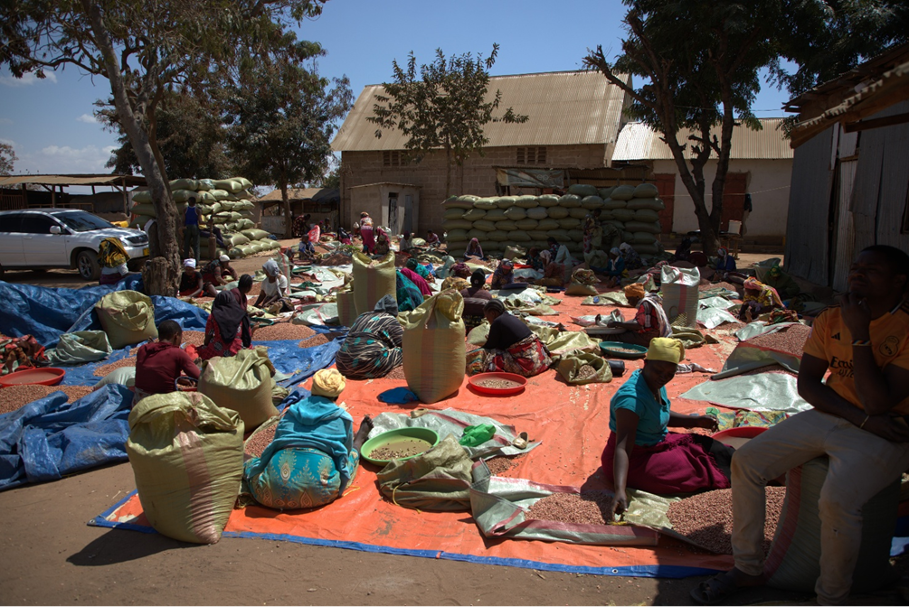
Smallholder farmers in Tanzania produce 75% of the country’s food under enormous challenges. Climate change continues to increase pressure on farmers across the country – who battle against rising temperatures, increased risk of pest and disease, and water scarcity – to produce the crops vital to food security and livelihoods in Tanzania. While legumes remain essential to food security, nutrition, soil fertility and rural incomes across the country, their potential remains constrained by weak seed systems, limited access to better seed varieties, and vulnerability to climate and market shocks. With agriculture contributing to one-quarter of the country’s GDP, and legumes contributing a huge value to agricultural production, it is critical that farmers and entrepreneurs are enabled to realise the full benefits legume seed systems can have.
Addressing Legume Bottlenecks in Tanzania
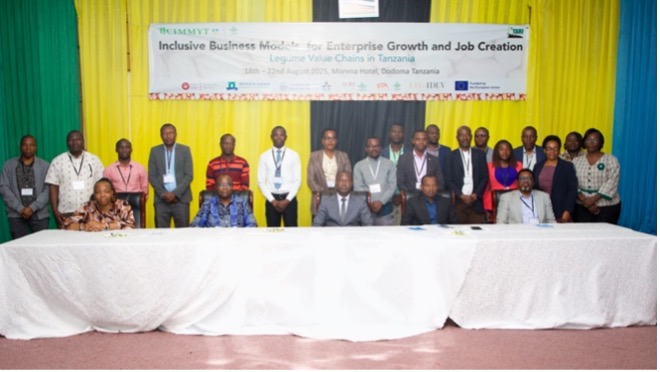
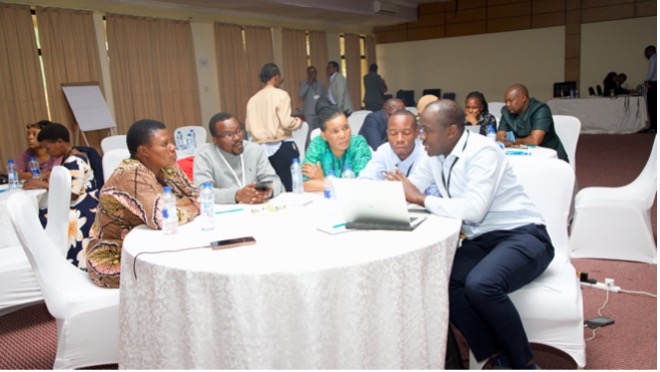
How can we address the bottlenecks limiting the economic and sustainability potential of legumes? To answer this question, LEG4DEV arranged a multistakeholder workshop aimed at creating practical solutions to the challenges facing stakeholders across the country’s legume value chain. 65 participants spanning government institutions, private seed companies, farmer organizations, development partners, and research institutions joined the LEG4DEV and TARI team in Tanzania over three days to discuss business models, enterprise opportunities and policy frameworks to address seed system bottlenecks.
The three-day workshop was opened with remarks from Mr. Nyasebwa Chimagu, Director General of the Tanzania Official Seed Certification Institute (TOSCI). In his opening remarks, Mr. Nyasebwa Chimagu shared insights into the recent innovation and investment by the Government of Tanzania into Tanzania’s agricultural sector, particularly within seed systems and legume and cereal value chains
“The Government continues to promote the use of improved seeds, increase the participation of youth and women in agriculture, strengthen the use of modern technology, and improve cooperative systems. Through programs such as Building a Better Tomorrow (BBT), young people are being empowered to participate in modern and productive agriculture.”
Mr. Nyasebwa Chimagu, Director General of the Tanzania Official Seed Certification Institute (TOSCI).
Following the day’s opening remarks, stakeholders worked in multisectoral groups across two days to identify, assess and review key issues limiting Tanzania’s legume value chains. Using CIMMYT’s Impact Accelerator for Seed Systems framework, participants analysed the legume value chain across themes including consumer engagement, market development, farmer decision making, and seed and grain market development.
Participants key recommendations were clear: limited access to early generation seeds, fragmented market linkages, affordability barriers, and weak quality assurance are the key bottlenecks limiting the potential of legumes in Tanzania.
Value Chains in Action: Fieldtrip to Kibaigwa Grain Market
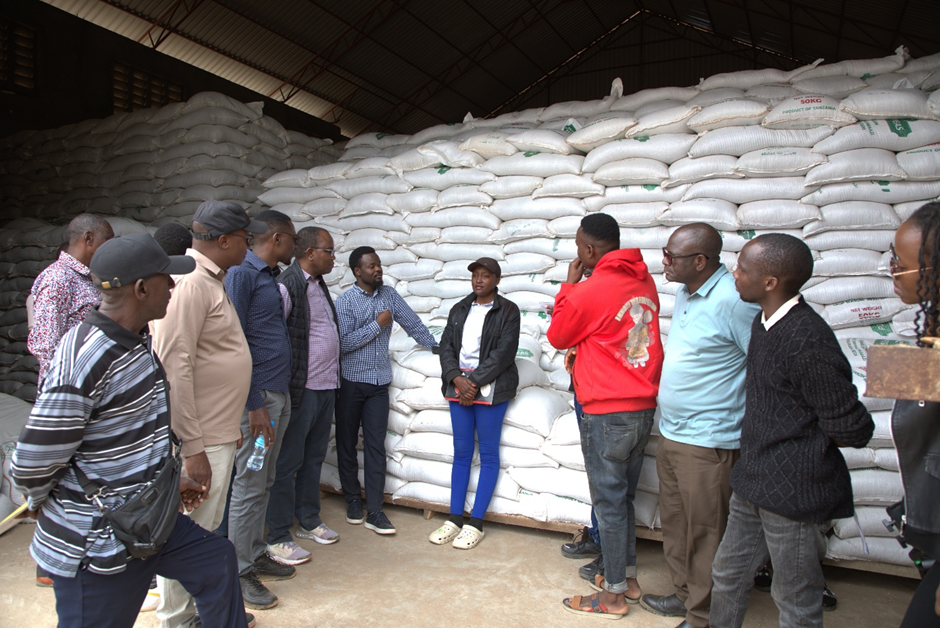
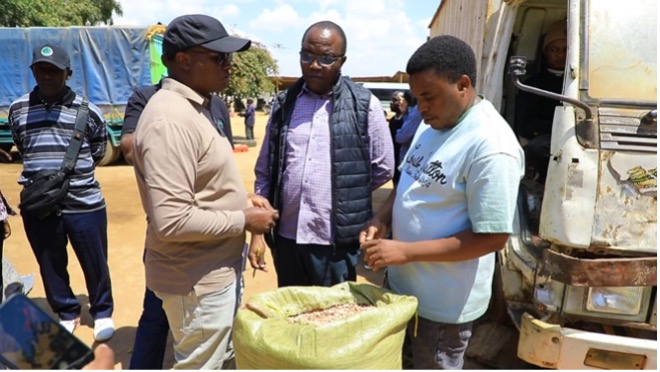
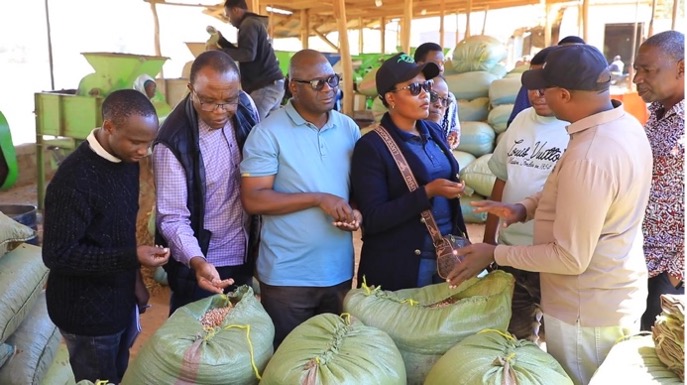
Day Three of the workshop had participants witness value chains in action with a visit to Kibaigwa Grain Hub in Dodoma – a major transit point for grains, pulses and legume exports in the country. Participants observed the hub’s robust groundnut value chain, alongside the 100,000 tonnes of pigeon pea found in the area. Participants learned about pigeon pea’s important role as a cash crop. Rather than being grown for local consumption, 95% of the hub’s pigeon pea is exported to India, with the remainder going to the UAE and countries across Asia. The participants learned how the Tanzanian government supports farmers to identify international markets through export facilitation programmes; highlighting how regulatory improvements, such as streamlined export certifications and tariff reductions, can boost market access.
The project extends thanks to TARI for their support in running the workshop and Kibaigwa Grain Hub for their support of the field trip. LEG4DEV expresses further gratitude to Director Generals Mr. Nyasebwa Chimagu (TOSCI) and Dr. Sophia Kashenge (TARI) for their presence, and to the EU DeSIRA programme for funding of this workshop through the LEG4DEV project.
Legume Boom: Next Steps for Legume Innovation in Tanzania
Through collaboration and stakeholder-informed insights, the TARI and LEG4DEV CIMMYT team is excited to share a Strategic Workshop Report and Roadmap, an Enterprise Opportunity Catalogue and Investment Profiles, and a Policy and Implementation Action Plan as outputs from the workshop. Full insights will be shared in the reports, but key takeaways so far include:
- Establishing reliable seed and grain markets is needed to reduce risk and increases buy-in from investors. Development programmes, agricultural cooperatives and processing companies can support robust markets.
- Look to formalise and strengthen existing relationships. An already established farmer and trader relationship, even if informal, provides a strong foundation for further partnership activities.
- Local adaptation and flexibility are key. For example, while vertical integration through one company makes sense in some contexts, networks of independent actors may work better in others. Value chain systems should be built with flexibility in mind, allowing actors across the chain to work in ways that best suit their current conditions.
- Sustained integration requires supportive policy. Policies related to seed certification should accommodate diverse business structures, from large-scale businesses to smallholder seed producers.
Together, these findings provide one roadmap to realise the full potential of Tanzania’s legume value chain. The report sharing the full findings from the workshop can be found in the workshop report, ‘Inclusive business models for enterprise growth and job creation: A playbook for scaling legume innovations in Tanzania – Workshop report’: https://cgspace.cgiar.org/items/b347a8a0-ba84-4e99-a9a7-8e1a9d770751
Citation
Marenya, P. P., Chipindu, L., Kirui, L., Narmandakh, D., Otieno, W., Kangile, J.R. Mwenda, E. T., & Stiliwati, F. A. (2025). Inclusive business models for enterprise growth and job creation: A playbook for scaling legume innovations in Tanzania – Workshop report. CIMMYT. https://hdl.handle.net/10883/36955