
Ciara Varley, Peter C. McKeown, Adam Muhammad Adam, Pacsu Simwaka, Charles Spillane
September 10 – 12, 2025, LEG4DEV PhD researchers Pacsu and Adam presented their latest findings on intercropping of soybean and maize at Tropentag 2025 in Bonn, Germany.
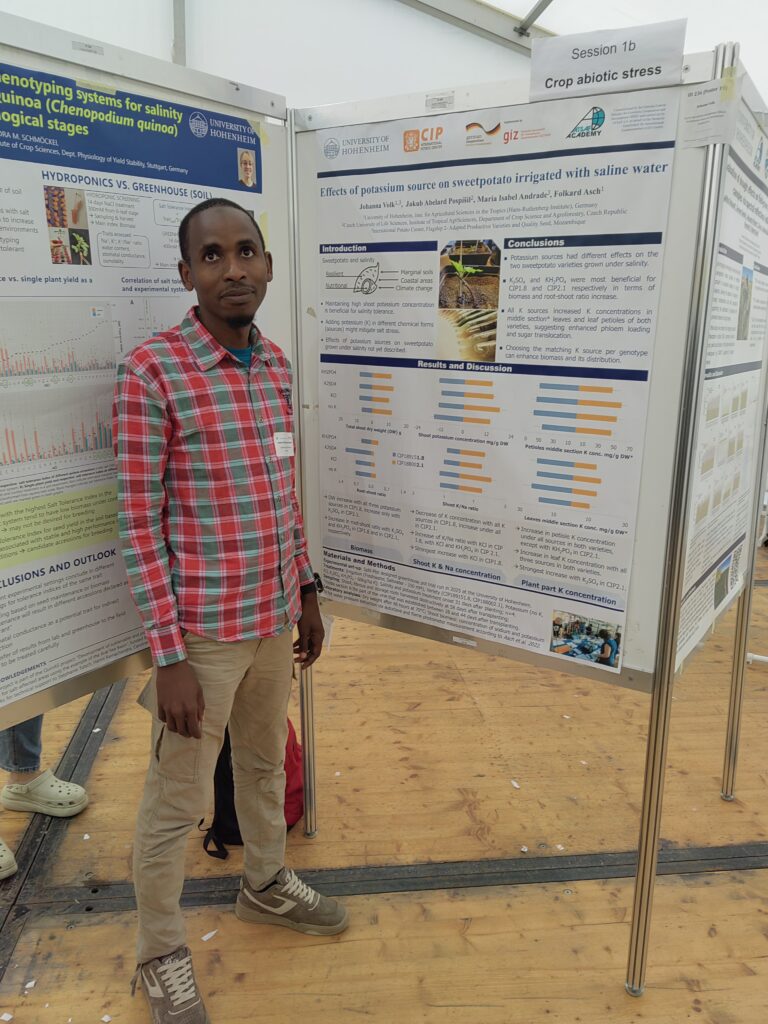
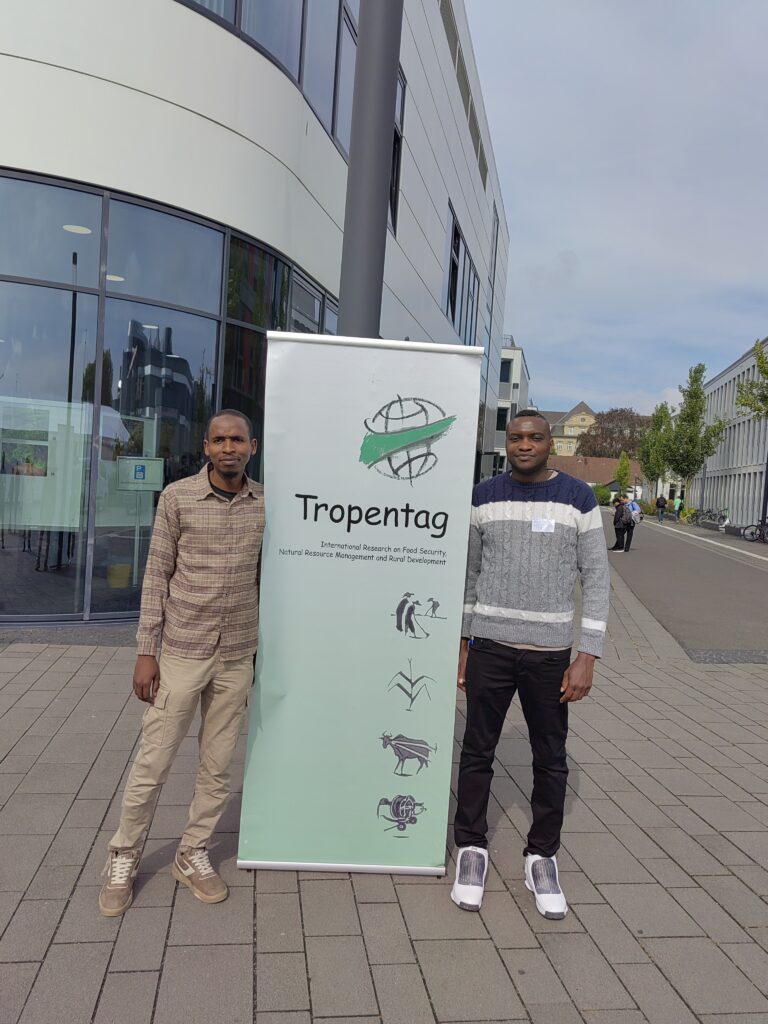
Tropentag, translating to ‘Tropics Day’ in English, is one of the largest annual conferences focused on research of tropical and subtropical agriculture, natural resource management and rural development. The conference is jointly organised by the German universities of Berlin, Bonn, Göttingen, Hohenheim, Kassel-Witzenhausen and ZALF e.V., alongside Ghent University, Czech University of Life Sciences Prague, BOKU Vienna, and the Council for Tropical and Subtropical Research (ATSAF e.V.) in collaboration with the GIZ Fund International Agricultural Research (FIA).
The 2025 theme, ‘Reconciling land system changes with planetary health’, placed the focus on how agriculture can adapt to climate change without sacrificing sustainable land use. Researchers from around the globe met at Bonn University to share their latest findings under the themes: Resilient Crop & Livestock Systems; Soil, Water & Biodiversity; Land Use, Forestry & Agroecology; Food Systems & Nutrition; Markets, Economics & Science Policy; Social Learning & Governance; and Technology & Agricultural Innovation.
LEG4DEV Shares Latest Model and Field Findings on Maize-Legume Intercropping
LEG4DEV was represented by PhD researchers Pacsu Simwaka and Adam Muhammad Adam.
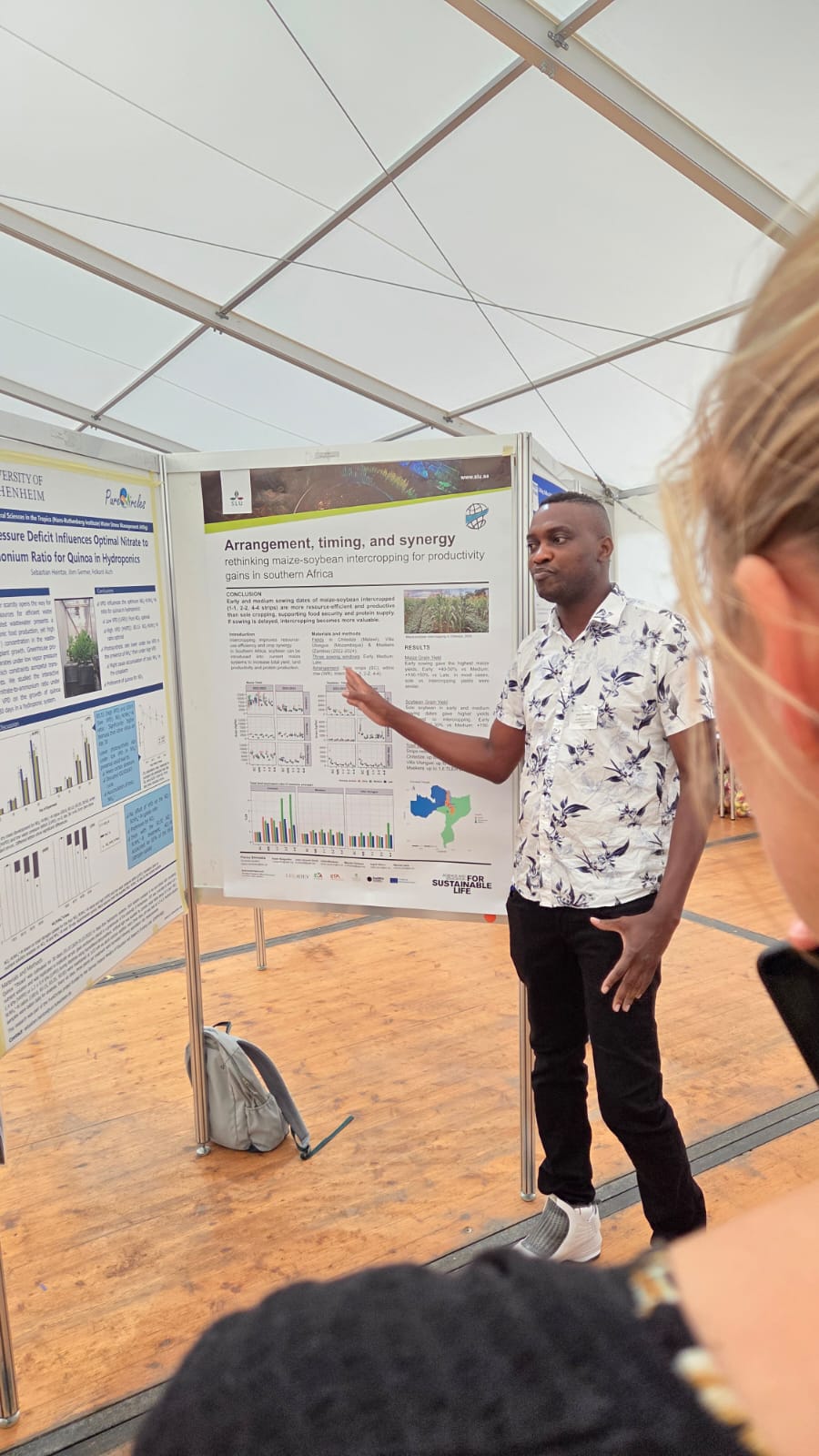
Pacsu Simwaka, doctoral student at Swedish University of Agricultural Sciences (SLU), presented: “Arrangement, timing, and synergy: Rethinking maize-soybean intercropping for productivity gains in Southern Africa”. He presented findings from his research in Chitedze (Malawi), Villa Ulongue (Mozambique), and Msekera (Zambia) in the 2022-2023 and 2023-2024 cropping system. Pacsu’s research assessed the impact of intercropping under different planting arrangements and times. He found early and medium planting of seeds in 2-2 and 4-4 strips of intercropping had better impacts on yields and total land equivalent ratio compared to sole cropping, highlighting and validating a best-practice method for smallholder farmers looking to improve their farm’s productivity.
Speaking on his research, Pacsu said:
“Our findings show that the way farmers arrange and time their maize-soybean intercrops have a significant impact on productivity. Early to medium planting, combined with appropriate strip configurations such as 2:2 and 4:4, allows crops to better utilize available light, water, and nutrients. This not only increases yields but also improves land productivity, meaning farmers can harvest more from the same piece of land. These practices offer a practical and scalable solution for smallholder farmers aiming to enhance productivity and resilience under changing climatic conditions.”
Adam Muhammad Adam, University of Hohenheim PhD researcher, presented: “Adaptation of the LUCIA model to simulate maize-legume intercropping systems in sub-Saharan Africa”. Adam’s research used the Land Use Change Impact Assessment (LUCIA) intercropping model to simulate cereal-legume intercropping systems in a low-input environment of Sub-Saharan Africa. The study used data from the Northern Guinea Savannah and Southern Guinea Savannah in Ghana to test how well the LUCIA model could simulate cowpea and soybean intercropping.
Speaking on his findings, Adam shared:
“Our findings indicate that the LUCIA-Intercrop module is robust and reliably simulates various forms of maize–grain legume intercrops across spatial configurations under water and nutrient-limited conditions. This is a key step toward scaling legume-based agroecological intensification for climate-resilient food and nutrition security in Africa.”
Next steps for LEG4DEV after Tropentag
LEG4DEV’s second visit to Tropentag offered a valuable opportunity to connect with other researchers working to make a positive impact on farming in Eastern and Southern Africa. The LEG4DEV project overall is excited to see the next steps for Adam and Pacsu as they continue to disseminate and scale their research findings on legume intercropping in the coming months.