Angharad Johnston, Ciara Varley, Charles Spillane, Peter C. McKeown.
In June, LEG4DEV’s Project Manager Angharad Johnston joined the WATDEV International conference in Nairobi to share some of our achievements, acquired knowledge and critical lessons from within the EU’s DeSIRA initiative in sub-Saharan Africa. Angharad was one over 70 participants including policymakers, researchers, development practitioners, farmers, and regional institutions, each providing a unique perspective on the application and scaling of agroecology in the region.
Under the theme of “Integrating Grassroots Knowledge and Research into Water and Soil Management in Africa”, the WATDEV conference was convened by the Association for Strengthening Agricultural Research in Eastern and Central Africa (ASARECA) and the Kenya Agricultural and Livestock Research Organisation (KALRO) on 15-16 June 2026 in Nairobi, Kenya and virtually. It was supported by the WATDEV (Climate Smart WATer Management and Sustainable DEVelopment for Food and Agriculture in East Africa) Initiative.
Day One: LEG4DEV Findings on sub-Saharan Africa’s Informal and Formal Seed Systems
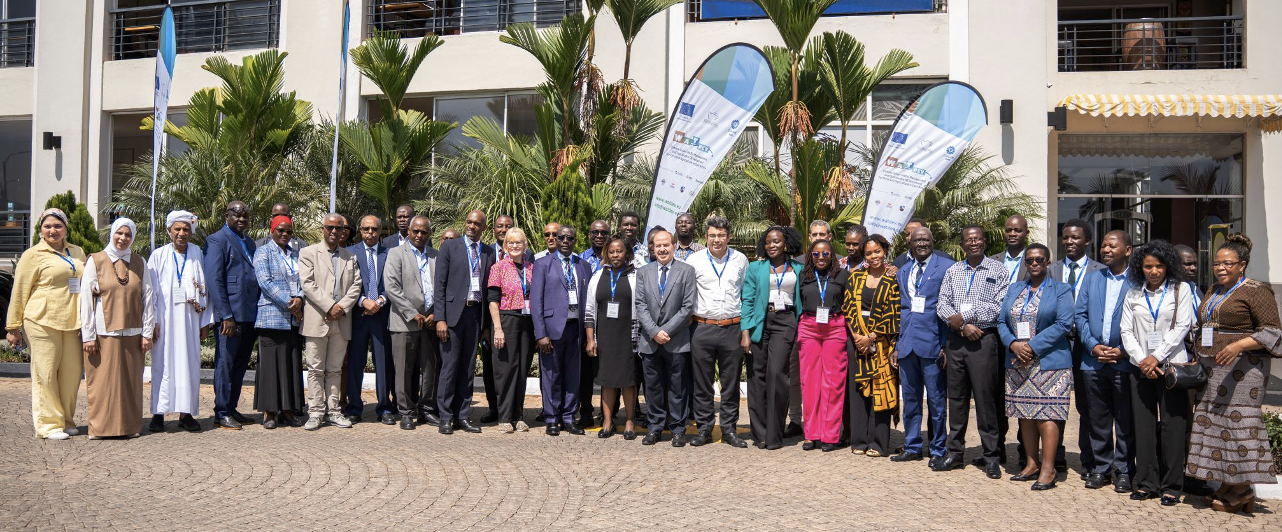
Angharad was invited as spokesperson for the LEG4DEV project for a session on Day One, focused on scaling Best Management Practices (BMPs) for water and soil health. She was one of several DeSIRA project representatives, each sharing and examining their projects’ findings and experiences of the challenges and barriers to scaling, typically stemming from weak extension services and systems, and slow institutional uptake and policy alignment.
Using the LEGDEV study of seed markets as a basis, Angharad spoke of the importance of effective extension services to support smallholder farmers. In 2024, the University of Galway’s LEG4DEV team published a study on legume seed systems across sub-Saharan Africa. The seed systems review considered the two parallel channels of the formal sector and the informal sector, both of which are important for smallholder access to legume seeds, and ways in which both systems could work in synergy for greater impact.
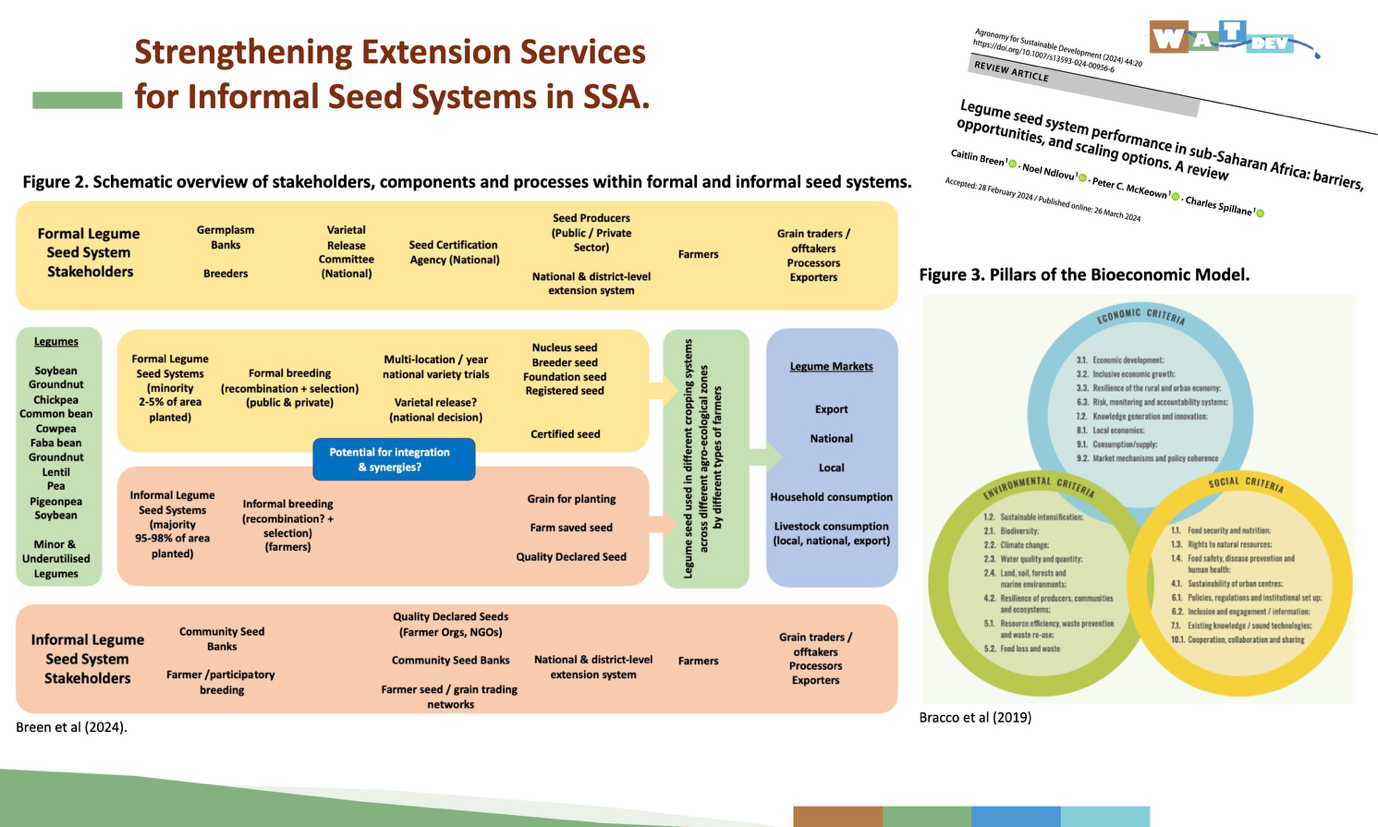
In some of the countries and contexts reviewed, while improved and certified legume crop varieties are available in the formal market, their affordability and slow delivery times, coupled with the limited reach of information to rural areas by their suppliers, reinforces the reliance of smallholder farmers on informal seed supply channels. Better targeted information services on importance and availability of quality certified legume seeds, including on improved agronomic traits, is necessary to broaden smallholder farmer access to reliable quality planting materials. Scaling legume-based agroecology will therefore depends on quality legume seeds (whether formally certified or via Quality Declared Seed systems) being accessible to smallholder farming communities and systems. Angharad spoke on the importance of policies that address the needs of all the relevant actors, components and processes of legume value chains.
The review also highlighted that variety choices for household consumption can be influenced by cultural and/or gender-based preferences, which need to be taken into account to ensure there is no loss of culturally important varieties within informal seed systems. To quote ASARECA’s Joshua Okonya (also in attendance at the conference):
“Science gives us the data, but grassroots knowledge gives us the context and community ownership. Combining the two is the only way to ensure sustainable development for food and agriculture in East Africa”.
Joshua Okonya, ASARECA
Angharad spoke on the importance of policies that capture the relevant actors, components and processes of the value chain, reporting to us that the issue of limited institutional capacity within African countries, and the need to rapidly build this up at the continental level, was a common talking point across the panel.
Angharad also highlighted another LEG4DEV study, led by ILRI’s Tamirat B. Jimma, which integrated agroecological, climate and topographical data to model long-term, basin-scale soil moisture trends across Ethiopia, showing how such outputs can elucidate trends and trajectories of water availability for crops, including crops. These results can be used to support Ethiopian farmers in their choices of what crops to grow, but also when to grow them, with potential to improve agricultural strategies and food security outcomes into the future.
Day Two: From Research to the Real World
The plenary discussions held on Day Two centred on Policy Uptake & Institutional Integration and explored how to move beyond research outputs to real world outcomes and impacts, beyond the life of a project funding cycle. Angharad reflected that the expert panellists from some of Africa’s most prominent NGO’s including Association for Strengthening Agricultural Research in Eastern and Central Africa (ASARECA), World Agroforestry (ICRAF), Forum for Agricultra Research in Africa (FARA) and Le Conseil Ouest et Centre Africain pour la Recherche et le Développement Agricoles (CORAF), as well as representatives from governmental and advisory services, brought a deep understanding of the practicalities of this question.
Reflecting on the conference and the LEG4DEV project to date, Angharad said:
“The panel discussions on Day Two really reinforced for me why research funding programmes like DeSIRA must continue to be designed and built, from their inception, to deliver investment opportunities, supported by economic modelling. Linking research initiatives with the private sector, as the primary means to scale proven agronomic practices and tools”.
Angharad Johnston, LEG4DEV
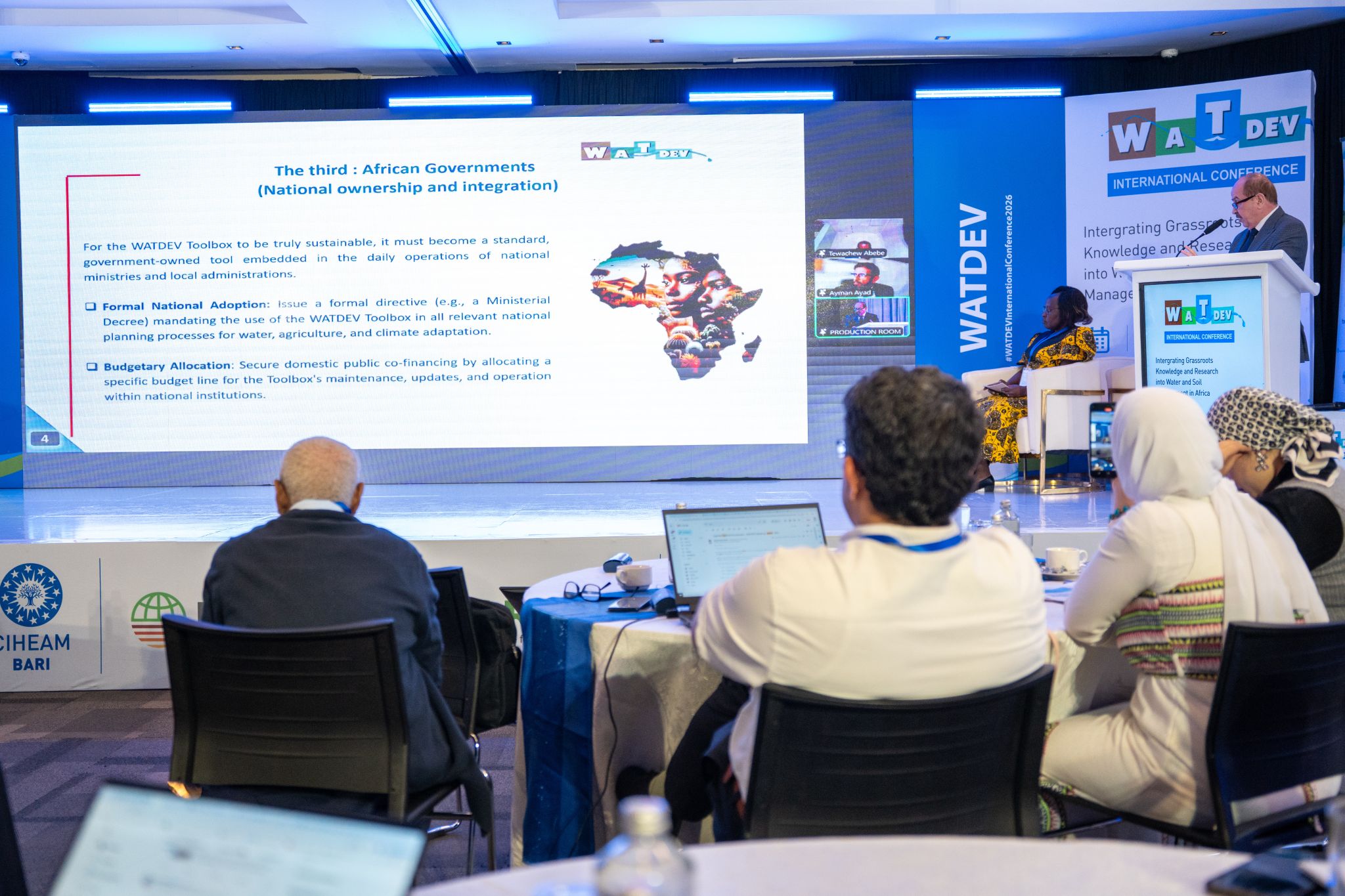
The LEG4DEV team congratulate ASARECA and all the WATDEV initiative partners for running a superb conference, and for delivering the WATDEV toolbox, a digital interface than enables the modelling and comparisons of agricultural and water-management scenarios across Egypt, Sudan, Ethiopia, and Kenya. This toolbox is a great example of the types of innovations possible when supported by initiatives like DeSIRA , that can be used to enable informed decisions about water use in agriculture, while ensuring the sustainability of natural resource management and improving the livelihoods of local communities.
The LEG4DEV project extend its thanks to the EU DeSIRA programme for funding of the LEG4DEV project that continues to strive to conduct research that enable legume scaling for development outcomes.